内容
隐藏
How Much Does PVC Coated Welded Wire Mesh Cost in Bulk Export Orders?
If you are searching for a single number — one price per roll or per square meter — you will not find it. That expectation is the first problem most buyers face when comparing bulk export quotes for PVC coated welded wire mesh.
The cost of PVC coated welded wire mesh in bulk export orders depends on specification, roll size, wire diameter, PVC color, quantity, and price terms. Without matching these details across quotes, you cannot judge whether a price is high or low. The real question is not "how much" but "how much for exactly what."
I have been handling export quotation requests for PVC coated welded wire mesh for over fifteen years. Every week, I receive inquiries that say something like: "Please send me your best price for PVC coated welded mesh." No mesh opening. No wire diameter. No roll size. No quantity. No destination port. I understand the impulse — buyers want a quick benchmark. But in this product category, a quick benchmark without matched specifications will mislead you. Let me walk you through how bulk export pricing actually works, from the factory side.
Why Can't You Compare PVC Coated Mesh Prices Without Matching Specifications?
Most pricing confusion starts here. Buyers collect three or four quotes and pick the lowest number. But those numbers often describe different products.
You cannot compare PVC coated welded wire mesh prices unless both quotes share the same mesh opening, wire diameter (before and after coating), roll width, roll length, roll weight, PVC color, and price terms. A lower price on a different specification is not a better deal — it is a different product.
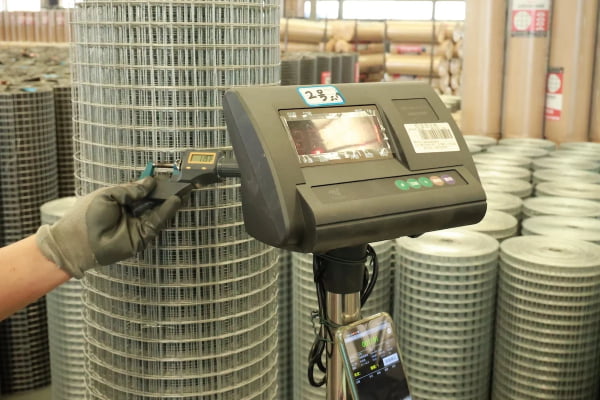
What specifications must match before comparing?
Here is a breakdown of the key variables that change cost:
| Specification | Why It Affects Price |
|---|---|
| Mesh opening (e.g., 50×50mm vs. 50×75mm) | Smaller openings use more wire per square meter1 |
| Wire diameter before coating (e.g., 1.8mm vs. 2.0mm) | Heavier wire = more steel = higher material cost |
| Wire diameter after coating (e.g., 2.5mm vs. 3.0mm) | Thicker PVC layer = more PVC material + slower production |
| Roll width (e.g., 0.9m vs. 1.8m) | Wider rolls need different machine setups and handling |
| Roll length (e.g., 15m vs. 30m) | Longer rolls may mean different packing and loading |
| PVC color (green, black, white, custom) | Standard green is cheapest; custom colors add cost and MOQ2 |
| Price terms (FOB, CIF, EXW) | Freight, insurance, and port charges change your landed cost |
I have seen buyers reject a quote from us because another supplier was "20% cheaper." When we asked for the competing specification sheet, the wire diameter before coating was 1.5mm instead of our quoted 2.0mm. The roll weight was 30% lighter. That is not a price difference — that is a product difference. If you are buying for resale or for a project with minimum strength requirements, receiving thinner wire means your end customer will complain, or worse, the mesh will fail in use.
How I confirm specifications before quoting
Before I send any price, I ask the buyer to confirm at least these points: mesh opening, wire diameter before and after PVC coating, roll width, roll length, PVC color, quantity, destination port, and payment terms3. If the buyer cannot confirm all of these, I will offer a standard specification as a baseline and explain clearly what is included. This protects both sides. It means when you compare my quote to another factory's quote, you are comparing the same thing.
Does a Wider Roll Cost Exactly Double a Narrower Roll of the Same Mesh?
This is one of the most common assumptions I encounter. A buyer gets a price for 0.9m wide rolls, then assumes 1.8m wide rolls should cost exactly twice as much. It sounds logical. But it does not always work that way.
A 1.8m wide roll does not always cost exactly double a 0.9m roll of the same mesh. Production handling, machine setup, roll weight, packaging difficulty, and container loading efficiency all influence the per-roll or per-square-meter price at different widths.
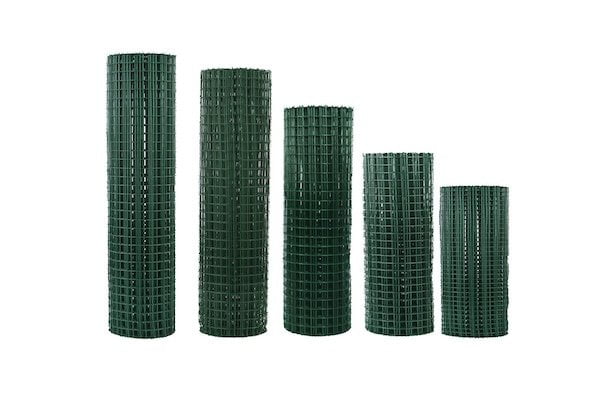
Why doesn't roll width scale linearly in price?
Here are the main reasons:
| Factor | Effect on Wider Rolls |
|---|---|
| Machine setup | Some widths require different welding machines or adjustments |
| Roll weight | Heavier rolls need more labor and equipment to handle |
| Packaging | Wider rolls may need reinforced packing or different pallet sizes |
| Loading efficiency | Wider/heavier rolls may load fewer pieces per container |
| Wastage | Wider rolls sometimes have slightly higher edge-trim waste |
Let me give you a real example. A 0.9m × 30m roll of 50×50mm mesh with 2.5mm PVC coated wire weighs around 15–18 kg depending on exact wire gauge. A 1.8m × 30m roll of the same mesh weighs around 30–36 kg. The wider roll is heavier and harder to handle during production, wrapping, and loading. Our workers need more time per roll. The packaging material cost is not simply doubled because wider rolls need stronger inner supports to prevent deformation during sea transport. And when we load a 20-foot container4, the number of wider rolls we can fit is not simply half the number of narrower rolls — sometimes the container space efficiency changes.
So when I quote, the 1.8m roll might be 1.85× to 1.95× the price of the 0.9m roll, not exactly 2×. This is not a trick. It reflects real production and logistics costs. If another supplier quotes you exactly 2× or even less, ask yourself: are they using the same wire diameter? The same PVC thickness? The same packing standard? Or are they cutting corners somewhere to hit a number that looks clean?
Does Buying More Always Mean a Lower Unit Price?
Buyers expect that doubling the order quantity should lower the unit price. This is sometimes true. But it is not always true, and it is never a simple linear relationship.
Larger quantity can reduce unit cost, but not always proportionally. MOQ thresholds, production scheduling, raw material timing, customization, packaging requirements, and container loading limits all create steps and plateaus in bulk pricing rather than a smooth downward curve.
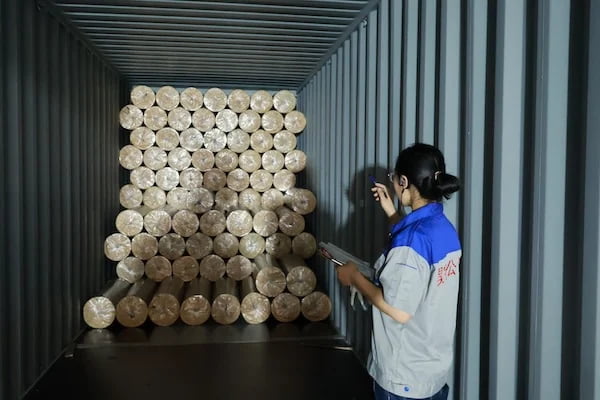
Where do bulk discounts come from, and where do they stop?
Here is how I think about quantity pricing from the factory side:
| Quantity Range | Typical Pricing Behavior |
|---|---|
| Below MOQ (e.g., <500 rolls) | Higher unit price due to setup cost spread over fewer units |
| 1 × 20GP container | Standard export price; production is efficient at this level |
| 2–5 containers | Slight discount possible; scheduling and material purchase improve |
| 10+ containers | Discount depends on delivery timeline and raw material lock-in |
| Very large annual contracts | Best pricing, but requires commitment, deposit, and planning |
The discount does not keep dropping forever. Here is why. After a certain point, the main cost driver is raw material — steel wire rod and PVC resin. These are commodity prices5. I cannot negotiate steel prices down just because you order more mesh. If steel prices are rising when you place your order, your "bulk discount" may disappear entirely because my input cost went up between your inquiry and your confirmation.
Also, customization limits discounts. If you need a non-standard PVC color, a specific roll length that does not match our machine settings, or custom printing on the packaging, these add cost regardless of quantity. I have had buyers order 10 containers but request five different specifications across those containers. That is not one bulk order — that is five separate production runs scheduled together. The discount is smaller than if all 10 containers were the same single specification.
My advice: if you want the best bulk price, simplify. Choose one specification, one color, one roll size, and order in full-container multiples. That gives me the most room to reduce your unit cost.
Why Should a Very Low Price Make You Cautious Instead of Excited?
I lose orders to cheaper quotes. It happens. But I also get repeat orders from buyers who tried the cheaper supplier once and came back. The reason is almost always the same: the delivered product did not match what the buyer expected.
A very low price without clear, confirmed specifications is a risk signal. The supplier may be quoting thinner wire, lighter roll weight, thinner PVC coating, or lower packing quality. The "savings" disappear when the product does not meet your market's expectations or your customer rejects the shipment.
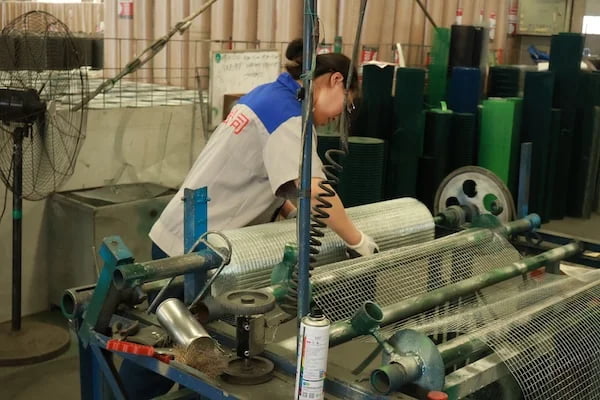
What can go wrong with an unusually cheap quote?
Here are the most common ways a low price becomes a costly mistake:
| What Changes | What You Receive | Consequence |
|---|---|---|
| Wire diameter reduced (e.g., 1.5mm instead of 2.0mm) | Lighter, weaker mesh | End-user complaints; product failure |
| PVC coating thinner | Less corrosion protection | Rust appears within 1–2 years; warranty claims |
| Roll length short (e.g., 28m labeled as 30m) | Less product per roll | Your customer measures and disputes |
| Roll weight lighter than expected | Less steel per roll overall | You paid "per roll" but got less mesh value |
| Packing quality reduced | Rolls deform or PVC surface scratches in transit | Unsaleable product on arrival |
How to protect yourself
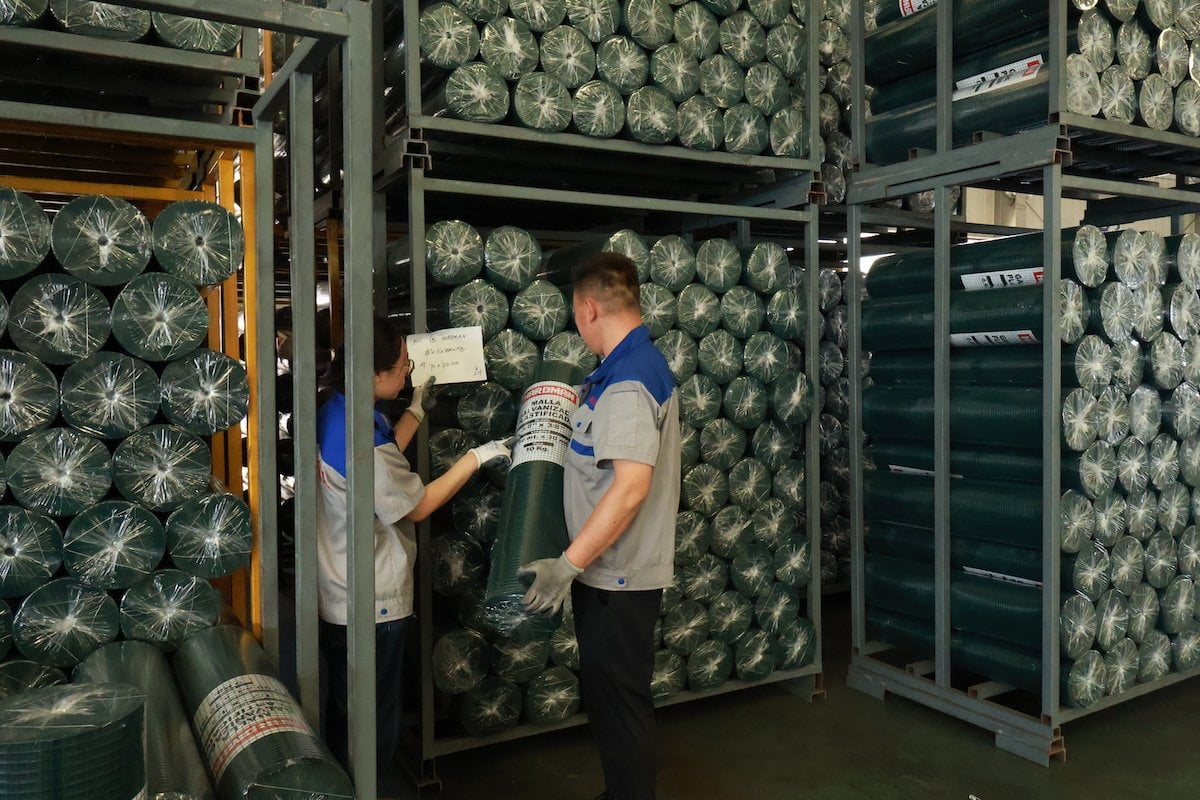
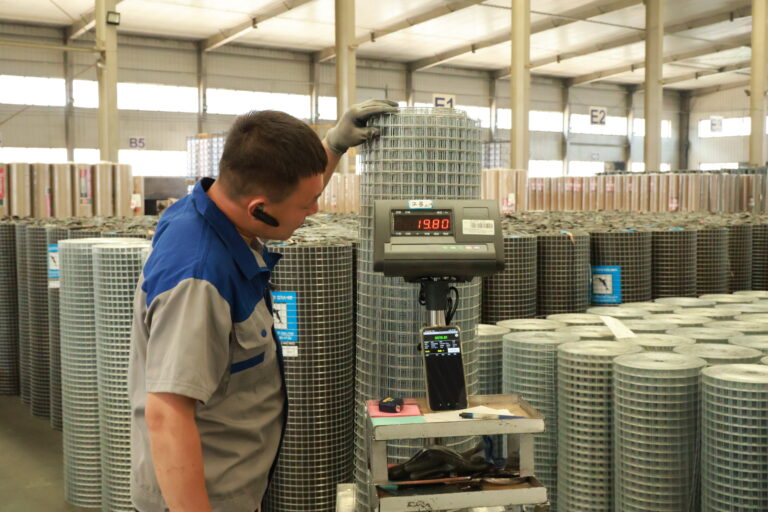
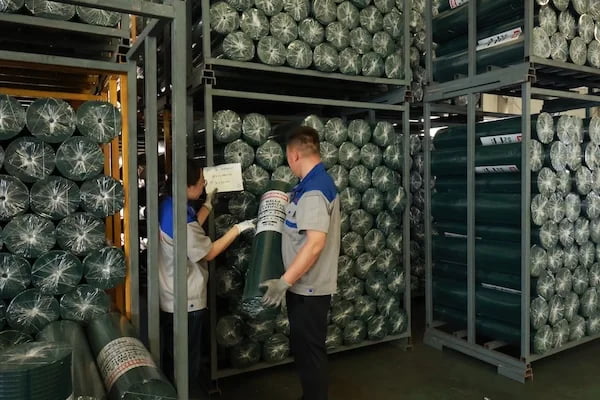
I always recommend buyers do this: ask the supplier to confirm the wire diameter before coating, wire diameter after coating, roll weight (net weight per roll), and send a photo of the packing method. If the supplier cannot or will not confirm these, that is your answer. A serious factory knows these numbers because we control them in production every day.
I also suggest requesting a production sample or a pre-shipment inspection6 photo set before the first bulk order ships. This costs very little compared to receiving a full container of product that does not match your needs.
One more point: price terms matter. If one supplier quotes FOB Tianjin7 and another quotes EXW factory8, you cannot compare the numbers directly. You must add the inland transport, port charges, and handling fees to the EXW price before comparing. I have seen buyers choose an "EXW cheaper" supplier and then realize the total landed cost was higher once all logistics were added.
What Should You Include in Your Inquiry to Get an Accurate Bulk Quote?
If you want a real, comparable price — not a placeholder number — you need to give the supplier enough information to quote seriously.
To get an accurate bulk export quote for PVC coated welded wire mesh, include: mesh opening, wire diameter (before and after coating), roll width, roll length, PVC color, quantity, destination port, required price terms, and any packing or labeling requirements.
A practical inquiry template
Here is what I recommend including in your first message to any supplier:
| Item | Example |
|---|---|
| Mesh opening | 50mm × 50mm |
| Wire diameter before coating | 2.0mm |
| Wire diameter after coating | 2.5mm |
| Roll width | 1.2m |
| Roll length | 25m |
| PVC color | RAL 6005 (dark green)9 |
| Quantity | 2,000 rolls (or "1 × 40HQ10") |
| Destination port | Felixstowe, UK |
| Price terms | CIF |
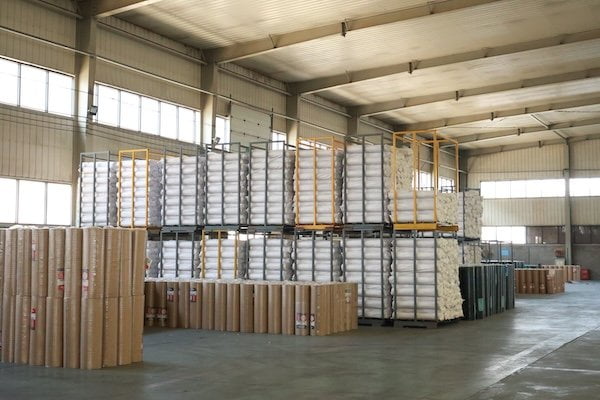
| Packing | Wrapped in plastic film + woven bag, 5 rolls per pallet |
| Labeling | Private label with buyer's brand (artwork provided) |
When I receive an inquiry like this, I can quote within 24 hours with confidence. The price I give is real. It reflects actual material cost, production time, and logistics. You can take that quote and compare it directly to another supplier who received the same brief. That is a fair comparison.
If you send a vague inquiry — "best price for PVC mesh" — I will still reply. But my reply will include questions. And those questions are not meant to waste your time. They exist because without answers, any number I give you is meaningless.
What happens after you get comparable quotes?
Once you have two or three quotes based on the same specification, you can evaluate on price, delivery time, payment terms, packing quality, communication speed, and supplier reliability. Price is important. But it is one factor among several. The cheapest quote that arrives three weeks late or arrives with damaged rolls is not actually cheap.
Conclusion
PVC coated welded wire mesh bulk pricing is a comparability problem, not a single-number answer. Match your specifications across quotes, understand what drives cost differences, and treat unusually low prices as questions to investigate rather than opportunities to celebrate.
"How to Calculate Welded Wire Mesh Weight per Square Meter", https://www.linkedin.com/posts/vivek-mishra-39475139_how-to-calculate-welded-wire-mesh-panel-activity-7396910231567552512-4Y2P. Engineering references for wire mesh manufacturing confirm that smaller aperture sizes require more weld intersections and greater total wire length per square meter, directly increasing material input costs. Evidence role: mechanism; source type: education. Supports: The inverse relationship between mesh opening size and wire material consumption per unit area in welded wire mesh production. Scope note: Exact consumption ratios vary by wire diameter and manufacturing method ↩
"RAL 6005 Touch Up Paint - Moss Green - 12 Oz Spray Can", https://www.crosslinkpaints.com/RAL-6005-12-Oz-Touch-Up-Paint.html. In PVC compounding, color changes require purging production lines and sourcing specific masterbatch formulations; standard colors like RAL 6005 dark green are stocked in bulk by compounders due to high demand in fencing applications, while non-standard colors incur setup costs and minimum batch requirements. Evidence role: general_support; source type: other. Supports: Green (typically RAL 6005) is the most common standard color for PVC coated fencing products, and custom colors require dedicated masterbatch runs with higher minimums. Scope note: Regional market preferences may differ; some markets may have different standard colors ↩
"[PDF] Trade Finance Stumbles - IMF eLibrary", https://www.elibrary.imf.org/downloadpdf/journals/022/0046/001/article-A011-en.pdf. In international trade finance, payment terms such as advance TT, letter of credit, or deferred payment allocate financial risk differently; suppliers may adjust quoted prices to reflect the cost of capital tied up during production and shipping, or the risk premium associated with less secure payment methods. Evidence role: mechanism; source type: education. Supports: Payment terms affect export pricing because they shift financial risk and working capital costs between buyer and seller. Scope note: The magnitude of price adjustment for different payment terms varies by supplier, country risk, and prevailing interest rates ↩
"20' Standard", https://www.hapag-lloyd.com/en/services-information/cargo-fleet/container/20-standard.html. A standard 20-foot dry container (20GP) has internal dimensions of approximately 5.9m length × 2.35m width × 2.39m height with a maximum payload of approximately 21,700–28,000 kg depending on carrier and route, creating physical constraints on how cylindrical cargo of varying diameters can be efficiently stacked. Evidence role: definition; source type: institution. Supports: Standard 20-foot container internal dimensions constrain how rolls of different widths and diameters can be loaded. Scope note: Actual usable space and weight limits vary by shipping line, route, and container condition ↩
"Metals and metal products : Mid–Atlantic Information Office", https://www.bls.gov/regions/mid-atlantic/data/producerpriceindexmetals_us_table.htm. According to commodity market indices, steel wire rod and PVC resin prices are subject to global supply-demand dynamics, with wire rod prices tracked by organizations such as the World Steel Association and PVC resin prices by petrochemical market reports. Evidence role: statistic; source type: institution. Supports: Steel wire rod and PVC resin are traded as commodities with prices determined by global markets, limiting manufacturer pricing flexibility. Scope note: The specific proportion of raw material cost in finished PVC coated mesh varies by manufacturer and specification ↩
"Trade Guide: WTO PSI", https://www.trade.gov/trade-guide-wto-psi. Pre-shipment inspection (PSI) is an established practice in international trade, recognized under the WTO Agreement on Preshipment Inspection, where independent third-party inspectors verify product quality, quantity, and packing conformity before goods are shipped from the country of export. Evidence role: general_support; source type: institution. Supports: Pre-shipment inspection is a recognized quality assurance practice in international trade. Scope note: The WTO agreement primarily addresses government-mandated PSI programs; voluntary buyer-arranged inspections follow similar principles but different procedural frameworks ↩
"[PDF] Standard Steel Welded Wire Mesh from Mexico", https://www.usitc.gov/publications/701_731/pub5109.pdf. Tianjin Port, one of China's largest seaports by cargo throughput, serves as the primary export gateway for manufacturing regions in Hebei province, where a significant concentration of wire mesh producers is located, particularly in Anping County. Evidence role: general_support; source type: government. Supports: Tianjin is a major export port serving the Hebei province wire mesh manufacturing cluster. Scope note: Port usage varies by specific factory location; some manufacturers may use other ports such as Qingdao or Shanghai ↩
"Know Your Incoterms - International Trade Administration", https://www.trade.gov/know-your-incoterms. Under ICC Incoterms® 2020, EXW (Ex Works) places minimum obligation on the seller, who makes goods available at their premises, while FOB (Free On Board) requires the seller to deliver goods on board the vessel at the named port of shipment, including all inland transport and export clearance costs. Evidence role: definition; source type: institution. Supports: EXW (Ex Works) and FOB (Free On Board) are standardized Incoterms with different cost allocation between parties. ↩
"RAL 6005 Touch Up Paint - Moss Green - 12 Oz Spray Can", https://www.lvppaints.com/RAL-6005-12-Oz-Touch-Up-Paint.html. RAL 6005, designated 'Moss Green' (Moosgrün) in the RAL Classic color system maintained by RAL gGmbH, is a widely used color standard in industrial coatings, particularly for fencing and outdoor metal products across European and international markets. Evidence role: definition; source type: institution. Supports: RAL 6005 is the standardized color code for a specific shade of green in the RAL Classic color system. Scope note: Actual PVC color matching to RAL standards may vary slightly depending on the PVC compound and production process ↩
"40' Standard High Cube", https://www.hapag-lloyd.com/en/services-information/cargo-fleet/container/40-standard-high-cube.html. A 40-foot High Cube (40HQ) container provides internal dimensions of approximately 12.03m length × 2.35m width × 2.69m height, offering roughly 76 cubic meters of cargo space compared to approximately 67 cubic meters in a standard 40-foot container, making it preferred for voluminous but lighter cargo. Evidence role: definition; source type: institution. Supports: 40HQ (40-foot High Cube) is a standard intermodal container type with greater internal height than a standard 40-foot container. Scope note: Actual payload capacity depends on carrier restrictions and route-specific weight limits ↩